What Should Be in a First Aid Kit?
A first aid kit is one of the simplest ways to prepare for unexpected injuries and emergencies. Whether it is kept at home, in a workplace, inside a vehicle, or carried during outdoor activities, having essential first aid supplies available can make it easier to provide immediate assistance while professional medical help is being arranged.
But what should be in a first aid kit?
The answer depends on where the kit will be used and the types of emergencies it is intended to support. A basic home first aid kit may focus on minor cuts, scrapes, burns, and everyday injuries, while an outdoor, workplace, or tactical kit may require additional or specialized supplies.
In this guide, we explain the essential items commonly found in first aid kits and how to choose the right configuration for different applications.
Why Is a First Aid Kit Important?
Accidents can happen almost anywhere. A small cut while cooking, an injury during outdoor activities, or an unexpected workplace accident may require immediate first aid.
A properly organized first aid kit provides quick access to commonly needed supplies.
The benefits include:
- Keeping essential medical supplies in one place
- Supporting immediate response to minor injuries
- Making emergency supplies easier to find
- Improving preparedness at home and work
- Providing portable first aid support during travel and outdoor activities
However, a first aid kit should be considered a support tool. Serious injuries and medical emergencies require appropriate professional medical attention.
Essential First Aid Kit Supplies
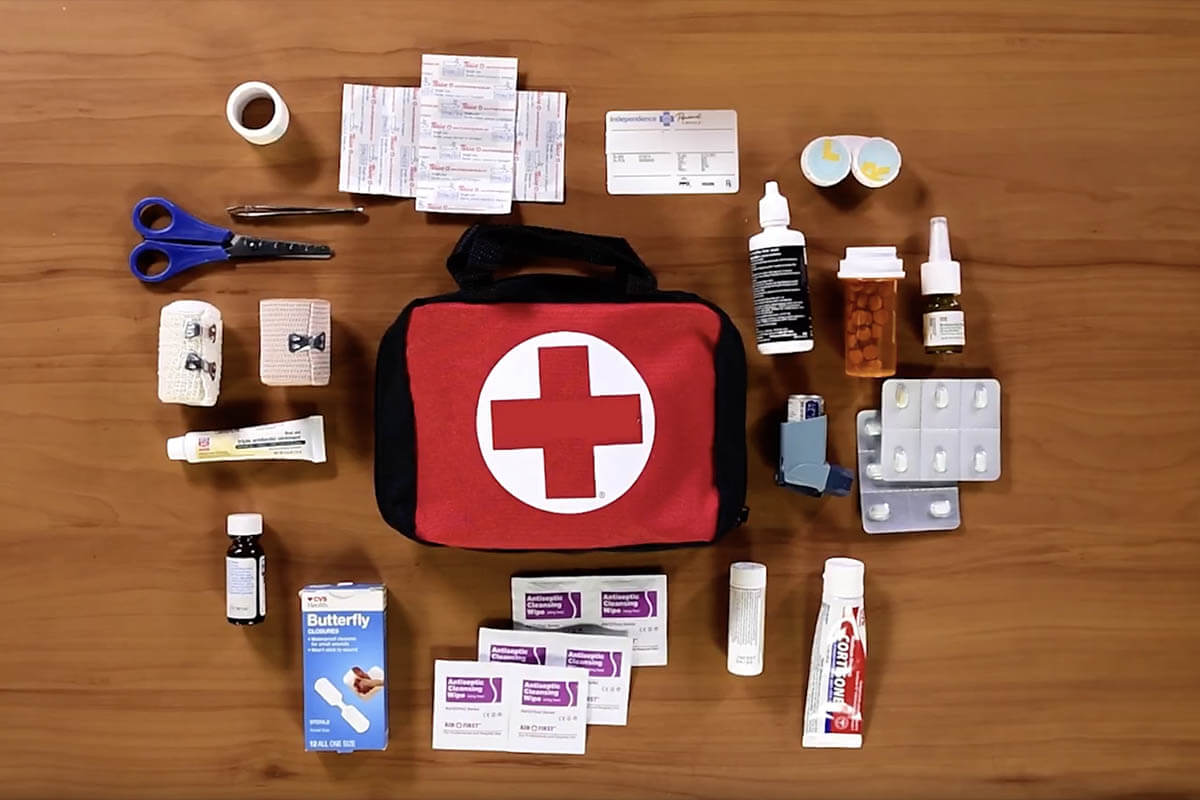
The exact contents can vary, but several categories of supplies are commonly useful.
1. Adhesive Bandages
Adhesive bandages are among the most basic first aid supplies.
They can be useful for protecting minor cuts, scratches, and superficial wounds from dirt and further irritation.
A first aid kit may include different sizes of adhesive bandages to accommodate different types of minor injuries.
When selecting a kit, check whether it contains enough bandages for the intended number of users and expected application.
2. Sterile Gauze
Sterile gauze is another important component of many first aid kits.
Gauze can be used to cover wounds and help manage bleeding. Different sizes and types may be included depending on the kit’s intended purpose.
For a basic household kit, standard sterile gauze may be sufficient for common minor injuries. More specialized kits may include additional wound-care products.
3. Medical Bandages and Dressings
Medical bandages and emergency dressings are designed to help cover and protect wounds.
The appropriate type depends on the application.
For example:
Home kits may need basic wound dressings.
Workplace kits may require a wider range of dressing sizes.
Outdoor or tactical kits may require specialized emergency dressings.
When purchasing a first aid kit, reviewing the actual contents is more important than simply looking at the size or appearance of the case.
4. Disposable Gloves
Disposable gloves are an important addition to many first aid kits.
They provide a basic protective barrier when assisting another person with an injury.
A kit may include multiple pairs because gloves can be used up during an emergency or replaced after use.
For workplaces, outdoor activities, and professional applications, it is especially important to consider whether the kit contains an appropriate quantity of protective gloves.
5. Medical Scissors
Scissors can be useful for cutting:
- Bandages
- Gauze
- Medical tape
- Clothing when necessary for access to an injury
A compact pair of medical or bandage scissors can be particularly useful in portable first aid kits.
The scissors should be stored securely and positioned where they can be accessed quickly.
6. Medical Tape
Medical tape can be used to secure dressings and gauze.
A first aid kit may contain different types and sizes depending on its intended use.
For a basic kit, medical tape provides a simple way to help keep wound coverings in place.
When selecting a kit for business or professional use, consider the type and quantity of tape included as part of the overall configuration.
7. Antiseptic and Wound-Care Supplies
First aid kits may include appropriate antiseptic or wound-cleaning supplies for minor injuries.
These products can help support basic wound care before further medical attention is available when necessary.
Because different markets and applications have different requirements, organizations purchasing first aid kits in larger quantities should review the specific contents and applicable regulations before finalizing a product configuration.
8. Emergency Blanket
An emergency blanket can be useful in outdoor, travel, vehicle, and emergency preparedness kits.
Its compact design makes it easy to store without taking up significant space.
For hikers, campers, travelers, and emergency teams, an emergency blanket can be a useful addition to a broader emergency kit.
This is one example of why outdoor and tactical first aid kits may require a different configuration from a basic home kit.
9. Tourniquet and Specialized Emergency Supplies
More advanced or tactical first aid kits may contain specialized emergency equipment such as tourniquets and hemostatic gauze.
These products are intended for specific emergency applications and should be used appropriately by people with suitable training.
Risenmed’s current first aid product range includes specialized accessories such as CAT tourniquets, hemostatic gauze, chest seals, emergency bandages, and other first aid supplies. (risenmed.cn)
These types of products demonstrate why a tactical first aid kit should be selected based on the actual environment and intended users rather than simply choosing the largest available kit.
10. First Aid Kit Case or Bag
The container itself is also important.
A good first aid kit case should help keep the contents:
- Organized
- Protected
- Easy to identify
- Easy to carry
- Accessible when needed
Depending on the application, first aid kits may use:
- EVA cases
- Fabric bags
- Hard cases
- Tactical pouches
- Portable medical bags
For outdoor and tactical applications, durability and portability may be especially important.
For home and workplace applications, organization and accessibility may be higher priorities.
First Aid Kit Contents by Application
Not every first aid kit needs the same supplies.
Home First Aid Kit
A home kit can focus on everyday injuries and basic wound care.
Common items may include:
- Adhesive bandages
- Sterile gauze
- Medical tape
- Gloves
- Scissors
- Wound-care supplies
- Basic dressings
The kit should be stored somewhere accessible but safely away from young children.
Workplace First Aid Kit
Workplace requirements depend heavily on the type of business.
An office may have different risks from a construction site, warehouse, factory, or laboratory.
A workplace first aid kit may therefore require:
- Multiple dressing sizes
- Gauze
- Bandages
- Gloves
- Scissors
- Medical tape
- Additional workplace-specific supplies
Businesses should also consider applicable workplace safety requirements when deciding what their first aid provisions should contain.
Outdoor First Aid Kit
Outdoor kits need to balance portability and functionality.
They may include:
- Bandages
- Gauze
- Dressings
- Gloves
- Scissors
- Emergency blanket
- Additional outdoor emergency supplies
The kit should be lightweight, compact, and easy to carry.
For longer trips or remote environments, additional emergency planning may be necessary.
Tactical First Aid Kit
Tactical first aid kits are designed for more specialized environments.
Depending on the application, they may include:
- Emergency dressings
- Tourniquets
- Hemostatic gauze
- Chest seals
- Gloves
- Trauma-focused supplies
- Medical shears
Risenmed provides military first aid kit solutions and related accessories that can be configured for different requirements. (risenmed.cn)
Specialized equipment should be selected carefully and used according to appropriate training and instructions.
How to Organize a First Aid Kit
Simply having first aid supplies is not enough. They should also be organized properly.
Consider separating the contents into categories such as:
Wound Care
Bandages, gauze, dressings, and medical tape.
Protection
Disposable gloves and other protective supplies.
Tools
Scissors and other appropriate tools.
Emergency Supplies
Emergency blankets and application-specific equipment.
Clear organization makes it easier to identify the required item quickly.
For businesses and organizations, labeling compartments can also help employees or designated first aid personnel locate supplies more efficiently.
How Often Should You Check Your First Aid Kit?
A first aid kit should not be purchased and then forgotten.
Regular checks are important to ensure:
- Supplies have not been used without replacement
- Packaging remains intact
- Products have not expired
- The contents still match the intended application
- The case or bag remains in good condition
After an emergency or first aid incident, the kit should be checked and missing supplies replaced.
Businesses can also assign responsibility for periodic inspections to help ensure their first aid supplies remain ready for use.
Can First Aid Kits Be Customized?
Yes. Customization can be especially valuable for businesses, distributors, organizations, and brands.
A custom first aid kit may be developed around specific requirements such as:
- Kit contents
- Bag or case design
- Color
- Logo
- Packaging
- Labels
- Internal organization
- Product quantity
- Intended application
For example, a company selling first aid products under its own brand may need a specific combination of supplies and custom packaging.
Risenmed’s existing product information indicates that first aid kit accessories and configurations can be customized according to customer requirements. (risenmed.cn)
Customization allows buyers to create a solution that is better suited to their target market rather than relying entirely on a standard configuration.
Choosing the Right First Aid Kit Supplier
If you are purchasing one kit for your home, the buying process may be relatively simple.
For distributors, organizations, retailers, and businesses ordering in larger quantities, supplier selection becomes much more important.
Before choosing a supplier, consider:
- Product quality
- Manufacturing capability
- Product range
- Customization options
- Certifications and documentation
- Packaging capabilities
- Production capacity
- Communication
- Delivery and logistics support
It is also useful to request product specifications and samples before placing a larger order.
A reliable manufacturer should be able to clearly explain what is included in the kit and what customization options are available.
Final Checklist: What Should Be in a First Aid Kit?
Before purchasing a first aid kit, use this simple checklist:
Basic Supplies
- Adhesive bandages
- Sterile gauze
- Medical dressings
- Medical tape
- Disposable gloves
Tools
- Medical scissors
- Other application-specific tools
Emergency Supplies
- Emergency blanket
- Specialized emergency products when required
Storage
- Durable case or bag
- Organized compartments
- Easy identification
For Specialized Applications
- Tourniquet
- Hemostatic gauze
- Chest seals
- Other appropriate emergency supplies
The final contents should always be selected according to the intended application and the needs of the people who will use the kit.
Conclusion
So, what should be in a first aid kit?
There is no single answer that works for every situation.
A basic home first aid kit may require essential wound-care supplies, while a workplace kit may need additional supplies based on occupational risks. Outdoor kits should prioritize portability and practical emergency supplies, while tactical kits may require more specialized equipment.
The most important thing is to choose a kit based on where it will be used, who will use it, and what types of emergencies it is designed to support.
For businesses and professional buyers, customized first aid kits can provide even greater flexibility by allowing the contents, packaging, branding, and configuration to be adapted to specific requirements.
Whether you are preparing a home, workplace, vehicle, outdoor adventure, or professional emergency kit, taking the time to choose the right supplies can make your emergency preparedness more organized and effective.
Looking for reliable first aid kits or customized solutions for your business? Explore Risenmed’s first aid kit solutions or contact our team to discuss your requirements.
FAQ’s
What are the most important items in a first aid kit?
Common essentials include adhesive bandages, sterile gauze, medical dressings, medical tape, disposable gloves, scissors, and other supplies appropriate for the intended application.
What should be in a home first aid kit?
A home kit should generally include basic wound-care supplies such as bandages, gauze, dressings, medical tape, gloves, scissors, and other appropriate household first aid supplies.
What should be in an outdoor first aid kit?
Outdoor kits should focus on lightweight, portable supplies such as bandages, gauze, dressings, gloves, scissors, and emergency supplies appropriate for the planned activity and environment.
Can I customize a first aid kit?
Yes. Depending on the manufacturer, you may be able to customize the contents, packaging, bag design, branding, labels, and overall configuration.
How often should a first aid kit be checked?
First aid kits should be checked regularly and after use to replace missing supplies, inspect packaging, and ensure the contents remain suitable for their intended application.
What is the difference between a standard and tactical first aid kit?
A standard kit is generally designed for everyday injuries, while a tactical kit may contain specialized emergency equipment intended for more demanding environments and applications.